One Blessed Teacher: A Designer's Review for Real Projects
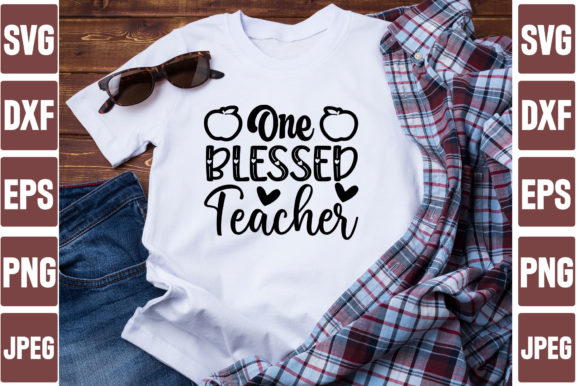
When I first pulled up the One Blessed Teacher graphic on my screen, I didn't just see a pretty image; I saw a potential bestseller for the upcoming back-to-school rush. As someone who spends half their life digitizing and the other half stitching out designs for clients, my immediate reaction is always to look past the colorful preview and imagine the thread on the fabric. This specific design, marketed as a high-resolution 300 DPI PNG with a 12"x12" print size, carries a warm, appreciative mood that resonates deeply with the education community. However, translating a Graphics file meant for printing into a tangible machine embroidery design requires a critical eye and some practical adjustments.
Visual Personality and First Impressions
The layout of One Blessed Teacher strikes a balance between playful and professional. The typography suggests a hand-lettered feel, which is currently very popular in the craft business sector. It avoids the stiff, robotic fonts that often plague older educational designs. Instead, it offers a human touch that feels perfect for a personalized gift. The inclusion of phrases like "Wife Mom Boss" alongside the main title adds a layer of relatability that modern teachers appreciate. They aren't just educators; they are multifaceted individuals. Visually, the design has a strong center of gravity, making it ideal for chest placements on custom apparel or centered layouts on tote bags.
That said, because this is originally a T-Shirt Designs asset intended for printing, the "stitching clarity" isn't inherent yet. In its current PNG format, the color transitions are smooth gradients. If you were to attempt to stitch this directly without proper digitization or simplification, you would run into issues with thread colors. A printer can blend millions of colors; an embroidery machine works with spools. To make this work as a finished product, you need to reduce those gradients into solid blocks of color suitable for fill stitch and satin stitch applications.
Real-World Application Scenarios
Let's talk about where this design actually shines. I recently worked on a project for a local boutique looking for small shop product ideas for Teacher Appreciation Week. One Blessed Teacher would have been the star of that collection. Imagine this design stitched onto a heavy canvas tote bag design. The sturdy fabric provides the necessary support for dense stitching, and the natural texture of the canvas complements the organic feel of the lettering.
Another excellent use case is sweatshirt embroidery. A heather grey crewneck with this design in school colors (navy, maroon, or forest green) creates a uniform look for a department or a thoughtful gift from a PTA. The 12-inch width allows for a large, statement piece on the back of a jacket or a prominent chest logo. For those running an Etsy seller shop, offering this as a printable mockup is great, but selling the actual finished product—like an embroidered apron for art teachers or a cap for coaches—adds significantly more value.
I also see potential in baby embroidery if the scale is reduced. A smaller version on a onesie that says "Future Teacher" or "Teacher's Pet" could be a hit for baby showers. However, scaling down requires careful attention to detail to ensure the text remains legible.
Technical Challenges and Fabric Considerations
While the aesthetic is strong, we must address the technical realities of moving from a digital graphic to thread. Since the source file is a high-quality PNG and not a native embroidery file (like DST or PES), you cannot load this directly into your machine. You must digitize it first. This is where the expertise comes in.
If you are planning to stitch this on stretchy fabric like a poly-cotton blend tee, you need to be cautious. The original design likely has solid areas that, when filled with thread, can cause puckering if the stitch density is too high. I recommend using a cut-away stabilizer rather than tear-away for this design to ensure longevity, especially since teacher gifts are often washed frequently.
Textured fabrics present another hurdle. If you choose a waffle-knit hoodie or a rough linen for a pillow cover, the fine details of the "Wife Mom Boss" text might get lost. In these cases, simplifying the design to use more running stitch outlines and less dense filling can help maintain definition. Furthermore, if you are working on curved surfaces like caps, the 12-inch width is obviously too large. You would need to resize the design significantly, ensuring that the small lettering doesn't become so tight that the needles break or the thread bunches up.
Critical Pre-Stitch Checklist
Before you commit to stitching this for a client or adding it to your inventory, run through this practical checklist:
- Test on Scrap Fabric: Always stitch a sample on the exact same material you plan to use for the final product. Check how the threads interact with the weave.
- Check Thread Contrast: The original PNG is colorful. Ensure your chosen thread palette has enough contrast so the text doesn't blend into the background, especially on dark garments.
- Review Stitch Density: If digitizing yourself, keep densities moderate to prevent stiffness. No teacher wants a shirt that feels like cardboard.
- Confirm Hoop Size: While the print size is 12"x12", verify your machine's maximum hoop size. You may need to split the design or resize it.
- Inspect Small Details: Look closely at the connection points between letters. In embroidery, isolated islands of thread need tie-ins or bridging to stay secure.
- Mockup in Black and White: Convert your digital preview to grayscale. If the design loses its shape without color, the contrast isn't strong enough for embroidery.
- Licensing Verification: The product description mentions it is ready for printed items. Before selling commercial embroidery products made from this graphic, confirm the license allows for derivative physical goods. Some graphic licenses cover prints but restrict stitched reproductions.
Enhancing Brand Value and Customer Trust
Using a well-chosen design like One Blessed Teacher correctly can elevate your brand. When a customer receives an item where the stitching is crisp, the stabilizer is hidden, and the design feels intentional, it builds trust. It shows that you care about quality, not just churning out items. For handmade product sellers, this attention to detail is what justifies a higher price point.
The emotional resonance of the phrase "One Blessed Teacher" combined with the acknowledgment of their other roles creates a powerful connection. It tells the recipient, "I see you, and I appreciate all that you do." This emotional hook is what drives engagement and repeat business. Whether you are creating holiday embroidery gifts for December or end-of-year tokens in May, the sentiment remains timeless.
In conclusion, while One Blessed Teacher starts as a vibrant graphic asset, its true potential lies in the hands of a skilled maker who understands how to translate pixels into thread. With the right digitization, appropriate fabric choices, and careful attention to stitch construction, this design can become a staple in your design assets library. It bridges the gap between trendy digital aesthetics and the enduring quality of handmade embroidery, making it a worthy candidate for your next creative project.